Supporting Safe Clinical Research Practice
The Emergency Scenario Training Guidance v6.0 is a comprehensive resource designed to support clinical research teams in preparing for and responding to medical emergencies. It supports safe clinical research delivery by providing a consistent approach to emergency scenario training.
Find out about this versions new features below:
What does the Emergency Scenario Training Guidelines cover?
The Emergency Scenario Training Guidelines cover nine core adult and six paediatric emergency scenarios:
Adult Scenarios
- Scenario 1: Recognition and Initial Treatment of Acute Coronary Syndrome (ACS)
- Scenario 1a: Assessment and Initial Treatment of a Critically Ill Participant in Cardiac Arrest
- Scenario 2: Recognition and Treatment of Syncope–Vasovagal
- Scenario 3: Recognition and Treatment of Anaphylaxis
- Scenario 4: Recognition and Treatment of Asthma
- Scenario 5: Recognition and Treatment of Adult Sepsis
- Scenario 6: Recognition and Treatment of Hypoglycaemia in an Alzheimer’s Patient
- Scenario 7: Recognition and Initial Treatment of an Adult Experiencing Cytokine Release Syndrome (CRS) with ICU Transfer
- Scenario 8: Recognition and Initial Treatment of Major Haemorrhage
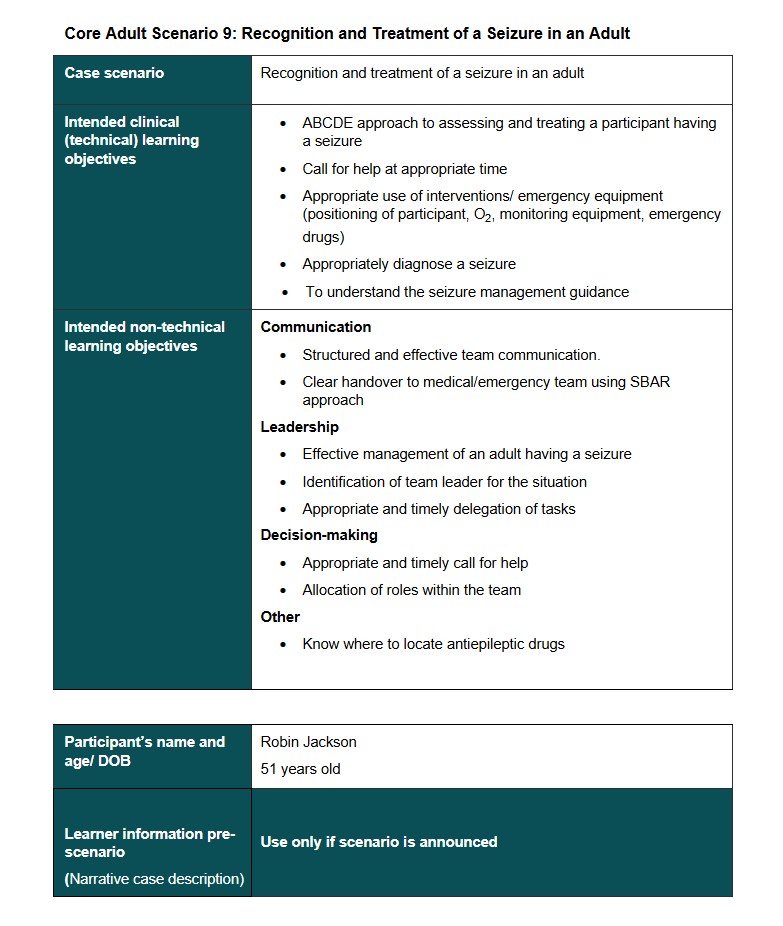
- Scenario 9: Recognition and Treatment of a Seizure in an Adult – NEW
Paediatric Scenarios
- Scenario 1: Recognition and Treatment of Anaphylaxis in a Child
- Scenario 2: Recognition and Treatment of a Seizure in a Child
- Scenario 2a: Recognition and Treatment of Status Epilepticus in a Child and Transfer to PICU
- Scenario 3: Recognition and Treatment of Childhood Asthma
- Scenario 4: Recognition and Treatment of Paediatric Sepsis
- Scenario 5: Recognition and Treatment of Paediatric Hypoglycaemia
- Scenario 5a: Recognition and Treatment of Paediatric Patient in Diabetic Ketoacidosis – NEW
- Scenario 6: Recognition and Initial Treatment of a Paediatric Patient Experiencing Cytokine Release Syndrome (CRS) – NEW
Why Emergency Scenario Training is Important?
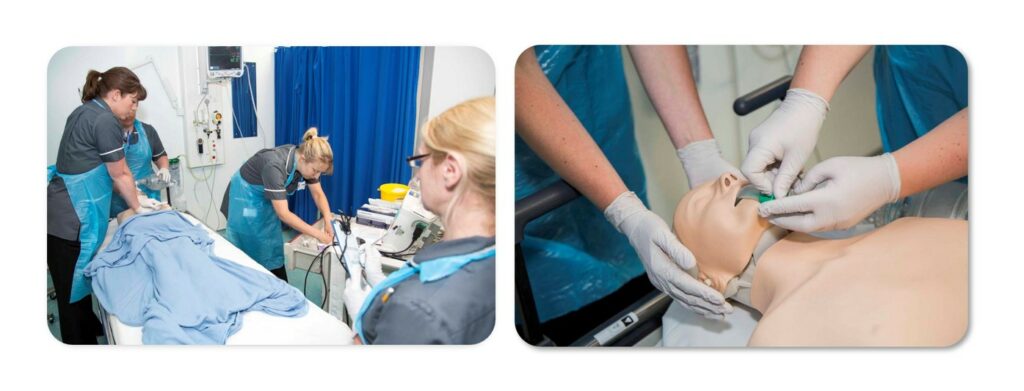
Emergency scenario training is a critical component of safe clinical research delivery. Its importance is supported by several key factors:
- Driven by safety improvements following serious clinical trial incidents (e.g. TGN1412)
- Supports MHRA expectations and Phase I accreditation requirements
- Ensures staff are competent, confident, and prepared to respond effectively to medical emergencies
Together, these elements help safeguard research participants, strengthen team preparedness, and support compliance with regulatory standards.
What’s New in Version 6.0?
This latest update introduces a range of improvements to enhance usability, relevance and alignment with current training needs:
- The syncope with BBB scenario has been removed due to overlap with the vasovagal syncope scenario, which is more commonly encountered and widely used across sites
- A new paediatric Cytokine Release Syndrome (CRS) scenario has been added, reflecting the increasing use of therapies associated with CRS in paediatric research.
- A new adult seizure scenario has been introduced, reflecting its clinical relevance and supporting staff confidence in recognising and managing seizures in a research setting
- A new Diabetic Ketoacidosis (DKA) scenario has been introduced, offering a more clinically complex simulation and supporting both technical and non-technical skill development in managing a life-threatening endocrine emergency
- The scenario on hypoglycaemia in a child with known diabetes has been removed and the hypoglycaemia scenario has been revised, now focusing on a child participating in a research study and undergoing risk screening for type 1 diabetes. This provides a more streamlined and relevant clinical presentation.
How Teams Can Use the Guidance?
The Emergency Scenario Training Guidance provides a structured framework to support the planning and delivery of emergency scenario training within clinical research teams. It can be:
- Used alongside local policies and resuscitation procedures
- Incorporated into training programmes to support regular scenario-based learning
- Used to document training activity to support inspection readiness
- Supported by editable templates that teams can use to develop and deliver their own scenarios
How Can I Access the Emergency Scenario Guidance?
- The Emergency Scenario Guidance is available via the UKCRF Network website – LINK
- The guidance, including the template is also accessible via the UKCRF Network Portal and Education Group MS Teams – LINK
- If you do not currently have access to the portal, please contact [email protected] – LINK
We encourage clinical research teams to review the updated guidance and integrate it into local training programmes.